
SCRMET
Machine Learning Methodology
RESEARCH TECHNOLOGY
11.02.2026

11 Feb, 2026
The workflow and software tools used in this project were designed to handle large data sets (hundreds of wells) consistently and efficiently, with minimal guidance or intervention from the user. The output from the system includes quality assessments based on analysis of the input data and ML answers, with flags that identify those wells that need to be reviewed by the petrophysicist. The user has the option to process each well in its entirety (the holistic mode) or switch to a zone-by-zone process, provided carefully selected wells tops (or markers) are available. Typical LQC logs, such as Caliper, cable tension, density-log correction, are not required for executing the workflow, although they can be used if and when available.
The workflow involves five basic steps, illustrated in the Fig.2 below. Further details of the algorithms, with examples, can be found in Akkurt et al. (2023).
The first step of the workflow involves loading and scanning of the input data. A series of basic checks (consistency of sampling rates, identification of dead traces, etc.) are carried out in this step to ensure that data is properly harmonized. Normalization of certain variables, as well as creation of additional features (differential hole size, resistivity ratios, various flags for QC) are also completed in this step. The user can quickly get an idea of the overall data availability and quality at the end of this step. An example of log availability for a subset of the data can be seen in Fig.3. Outliers, defined as the data points that are inconsistent with the rest of the data, are identified in Step 2 using a combination of concepts borrowed from the field of Outlier Detection, operating in multi-dimensional space. A discussion of the outlier detection algorithm can be found in Akkurt et al (2022). In Step 3, data free of outliers are used to define the petrophysical footprint of each well, which is used to quantify petrophysical similarity between wells. Various similarity metrics are then consumed to create clusters of wells based on similarity. This step is designed to handle spatial variations and can be considered an ‘analog-well’ finder.
Step 4 involves training and regression, where for each well, ML models are trained to a cluster of wells as determined in Step 3 and applied to predict the required log responses. Step 5, the final step in the workflow, is crucial as it allows the user to assess the quality of the reconstruction carried out in Step 4. Automated analysis of uncertainty, as well as other QC metrics provided, are used to flag wells for further attention of the user. Furthermore, the wells are ranked, going from higher to lower uncertainty, to aid the user in the visual inspection process.
VISIT ALSO







TOP NEWS

INDUSTRY NEWS
11 Feb, 2026
INTERVIEWS
11 Feb, 2026
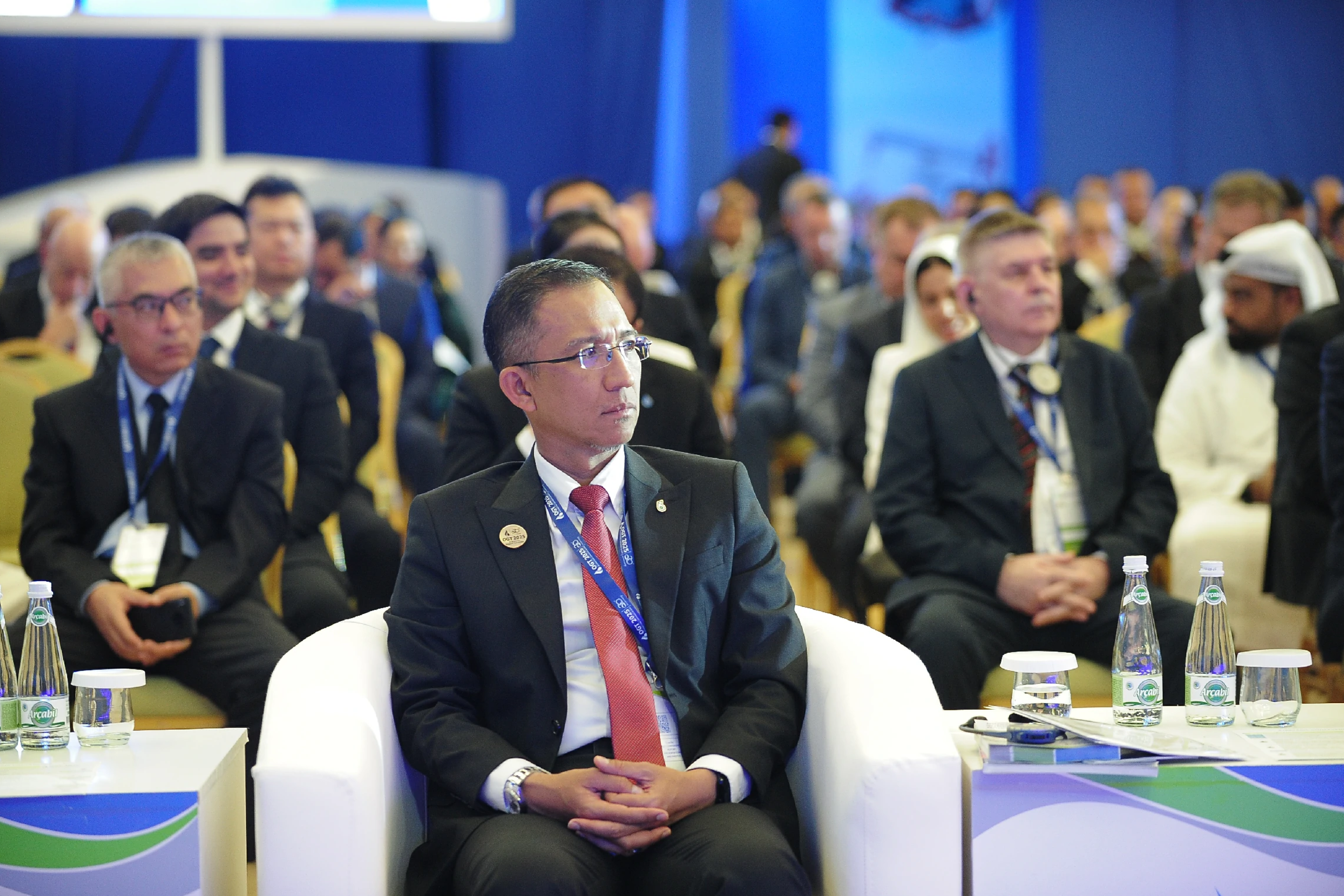
Interview with Mr. Ismadi Bin Ismail,CEO of PETRONAS in Turkmenistan
ENERGY
11 Feb, 2026
Italy’s energy major Eni announces FID for Mozambique’s Coral North FLNG project
TENDERS
27.02.2026
15.04.2026
Turkmengas Announces Tender for Purchase of Material and Technical Resources

Archabil Avenue 56, Ashgabat, Turkmenistan
02.03.2026
15.04.2026
Turkmengas Announces Tender for Purchase of Material and Technical Resources
Archabil Avenue 56, Ashgabat, Turkmenistan
04.03.2026
21.04.2026
Türkmennebit Extends Tender for Reconstruction of Railway Gasoline Loading Rack
Archabil Avenue 56, Ashgabat, Turkmenistan
04.03.2026
17.04.2026
Turkmengeology Announces International Tender for Purchase of Material and Technical Resources
Turkmenistan, Ashgabat, Archabil Ave., 56
06.03.2026
22.04.2026
Turkmengas Announces Tender for Purchase of Material and Technical Resources
Archabil Avenue 56, Ashgabat, Turkmenistan
11.03.2026
23.04.2026
Turkmengaz Announces Prequalification for International Tender for FEED Development of Underground Gas Storage
Archabil Avenue 56, Ashgabat, Turkmenistan
16.03.2026
28.04.2026
Türkmennebit Announces International Tender for the Procurement of Specialized Machinery and Spare Parts
Archabil Avenue 56, Ashgabat, Turkmenistan
19.03.2026
01.05.2026
Turkmengas Announces Tender for Purchase of Material and Technical Resources
Archabil Avenue 56, Ashgabat, Turkmenistan


© 2026 All rights reserved.
Contacts
-
 +99312414008
 -
+993 71 62 22 38
-
 R.C. «Gurtly» 63. Ashgabat, Turkmenistan
